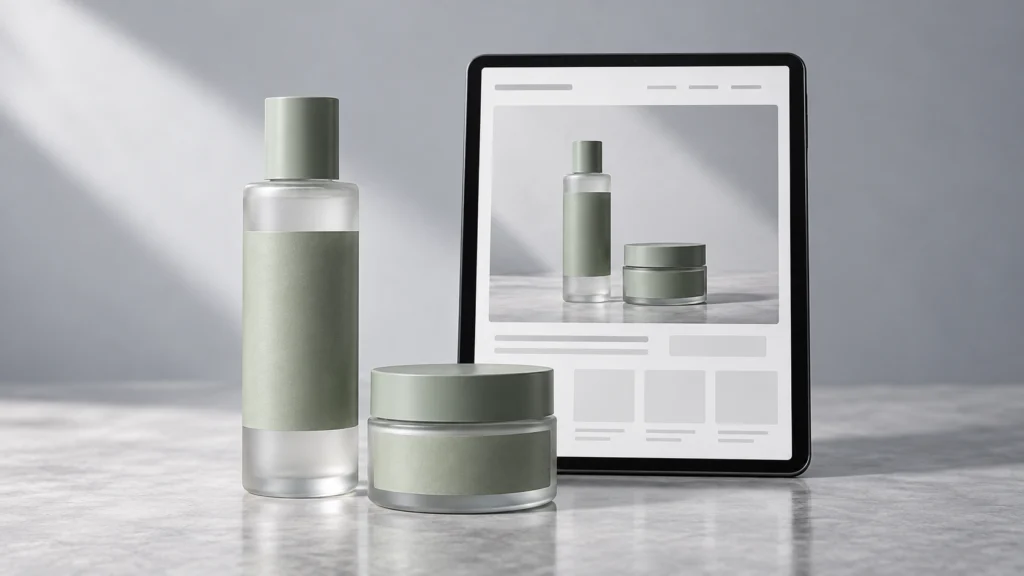
Find your industry
- English copy written from scratch
- Page structure
- Product and ingredient pages
- Newsletter copy
What an overseas customer does not know
An overseas customer cannot read the Japanese page, cannot ask a friend, and has no reason to trust the claims on a bottle. They will look for an English page that says what the product is, what is in it, and why it is made that way.
If that page does not exist, the brand is judged on the packaging alone — and the packaging of a careful Japanese brand looks like every other bottle abroad.
How it works
- Decide who the page is for: a direct customer, a retailer, or a distributor.
- Agree the terms — ingredient names, product names, claims — so nothing is invented in translation.
- Write the English site from the reader’s questions: what it is, what is in it, how to use it, and why it costs what it does.
- Keep the claims to what can be said. Cosmetic rules differ by market, and a claim that travels badly is a problem rather than a selling point.
Common questions
Do you translate the Japanese site?
No. We write the English version around what an overseas reader needs, which is usually a different order and a different amount of detail.
What about ingredient names?
We agree them first. The same ingredient has a cosmetic name, a common name and a regulatory name, and they are not interchangeable.
Can you make claims about the ingredients?
Only the ones that can be supported and are permitted where the reader is. We will tell you which are safe.